Nashville-style hot chicken has taken the fast-casual dining world by storm, and Dave’s Hot Chicken Nutrition stands at the forefront of this spicy revolution. However, understanding the nutritional content of your favorite fiery meal becomes crucial when you’re tracking calories, managing macros, or simply making informed dietary choices.
This comprehensive guide provides detailed nutritional information for Dave’s Hot Chicken menu items, helping you navigate their offerings while staying aligned with your health and fitness goals.
Table of Contents
Understanding Dave’s Hot Chicken Menu Categories
Dave’s Hot Chicken specializes in Nashville-style hot chicken served in two primary formats: tenders and sliders. Additionally, their menu features various sides, drinks, and desserts that complement the main offerings.
The restaurant’s signature approach involves hand-breaded chicken prepared with varying spice levels, from mild to “Reaper” level heat. Understanding how these preparation methods affect nutritional content helps you make better-informed choices.
Dave’s Hot Chicken Tenders: Complete Nutritional Breakdown

Single Tender Nutritional Facts
A single mild tender contains approximately 550 calories, with 31g carbs, 35g fat, and 25g protein. However, nutritional values can vary based on spice level and preparation methods.
Detailed Tender Nutrition (Per Single Tender):
- Calories: 550-600 (varies by spice level)
- Protein: 25-28g
- Carbohydrates: 31-35g
- Fat: 35-40g
- Sodium: 1,200-1,500mg
- Fiber: 2-3g
The high protein content makes tenders a viable option for those following high-protein diets. However, the significant fat and sodium content requires consideration for individuals monitoring these macronutrients.
Multiple Tenders and Combo Options
When ordering multiple tenders, nutritional values scale proportionally. A three-tender combo can easily exceed 1,600 calories before adding sides and beverages. Therefore, portion control becomes essential for maintaining balanced nutrition.
Three-Tender Combo Approximate Nutrition:
- Calories: 1,650-1,800
- Protein: 75-84g
- Carbohydrates: 93-105g
- Fat: 105-120g
Dave’s Hot Chicken Sliders: Macro Analysis
Single Slider Nutritional Profile
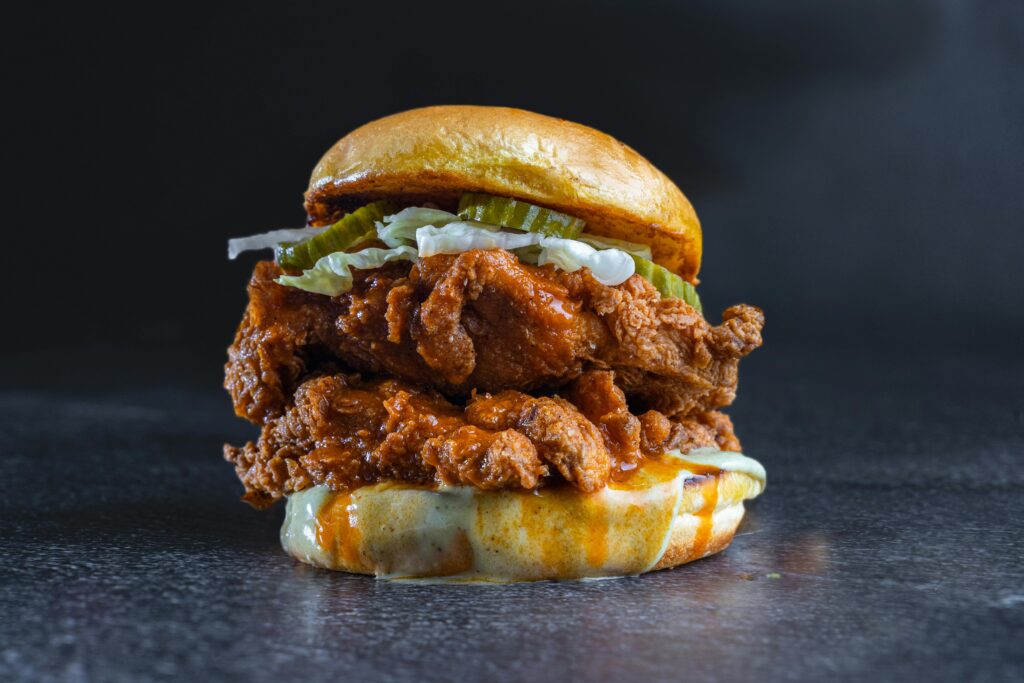
Dave’s Hot Chicken sliders contain approximately 620 calories per serving, with 41g carbs, 37g fat, and 31g protein. The inclusion of buns, pickles, and signature sauces contributes to the overall caloric density.
Complete Slider Nutrition (Per Single Slider):
- Calories: 620-680
- Protein: 31-35g
- Carbohydrates: 41-45g
- Fat: 37-42g
- Sodium: 1,400-1,700mg
- Sugar: 5-8g
Slider Modifications for Better Nutrition
Customizing your slider order can significantly impact nutritional content. Consider these modifications:
Lower-Calorie Options:
- Request lighter sauce application (reduces calories by 50-100)
- Add extra pickles for flavor without significant calories
- Consider removing one bun half for carb reduction
Side Items and Their Nutritional Impact
Dave’s Hot Chicken offers various side options that can substantially increase your meal’s total nutritional content. Understanding these additions helps you plan balanced meals.
Fries and Potato Sides
Regular fries typically add 300-400 calories to your meal, with 15-20g fat and 40-50g carbohydrates. Mac and cheese sides contribute approximately 350-450 calories with higher fat and sodium content.
Healthier Side Alternatives
While traditional sides are calorie-dense, you can make strategic choices:
- Coleslaw provides fewer calories while adding fiber
- Side salads (when available) offer nutrient density with lower calories
- Consider sharing sides to reduce portion sizes
Spice Level Impact on Nutrition
Dave’s Hot Chicken offers multiple spice levels, from mild to extremely hot. Interestingly, spice level can affect nutritional content through various factors:
Mild to Medium Levels: Standard preparation methods with consistent breading and oil content.
Hot to Reaper Levels: May include additional sauce applications, potentially increasing calories by 25-50 per serving. The extra sauce contributes primarily to fat and sodium content.
Macro-Friendly Ordering Strategies
High-Protein Focus
For individuals prioritizing protein intake, consider these approaches:
- Order tenders without breading when possible
- Focus on single items rather than combos
- Pair with lower-calorie beverages
Balanced Macro Approach
Creating balanced meals requires strategic ordering:
- Choose one main item (tender or slider)
- Add a vegetable-based side when available
- Opt for water or unsweetened beverages
Lower-Calorie Options
Strategies for Calorie Management:
- Share meals with dining companions
- Order children’s portions when available
- Focus on single items rather than combo meals
- Save half for later consumption
Nutritional Considerations for Different Dietary Goals
Weight Management
When incorporating Dave’s Hot Chicken into weight management plans, portion control becomes paramount. With tenders containing 250-600 calories each depending on preparation, planning your daily caloric intake around these indulgences requires careful consideration.
Athletic Performance
Athletes requiring higher caloric intake may find Dave’s Hot Chicken suitable for meeting energy demands. The combination of carbohydrates and protein supports recovery, though the high sodium content necessitates adequate hydration.
Special Dietary Needs
Individuals with specific dietary restrictions should note:
- High sodium content may not suit low-sodium diets
- Gluten-containing breading affects those with celiac disease
- High fat content requires consideration for certain medical conditions
Comparing Dave’s Hot Chicken to Competitors
Understanding how Dave’s Hot Chicken compares nutritionally to other hot chicken restaurants helps inform dining decisions:
Caloric Density: Generally higher than traditional fast food but comparable to other premium hot chicken chains Protein Content: Competitive protein levels due to substantial chicken portions Sodium Levels: Higher than average due to seasoning and preparation methods
Tips for Healthier Dave’s Hot Chicken Dining
Pre-Visit Planning
Research and Decide: Review nutritional information before visiting to make informed choices Set Limits: Decide on portion sizes and stick to predetermined limits Balance Daily Intake: Plan lighter meals around your Dave’s Hot Chicken visit
During Your Visit
Customization Requests: Don’t hesitate to ask for modifications Sharing Options: Consider sharing meals to reduce individual portion sizes Hydration: Drink plenty of water to offset high sodium content
Post-Meal Strategies
Activity Planning: Schedule physical activity after higher-calorie meals Next-Day Balance: Plan lighter, nutrient-dense meals the following day Hydration Continuation: Maintain increased water intake for 24-48 hours
Making Dave’s Hot Chicken Work with Your Fitness Goals
Integration with Exercise Routines
Timing your Dave’s Hot Chicken consumption around workouts can optimize how your body processes the meal’s macronutrients. Post-workout consumption may better utilize the carbohydrate and protein content for recovery.
Flexible Dieting Approach
Many successful dieters incorporate occasional indulgences like Dave’s Hot Chicken into their overall nutrition plans. The key lies in accounting for these meals within your daily or weekly caloric targets.
Understanding Menu Variations and Seasonal Changes
Dave’s Hot Chicken occasionally introduces limited-time offerings and seasonal menu items. These additions may have different nutritional profiles than standard menu items. Always verify current nutritional information when trying new menu offerings.
The Bottom Line on Dave’s Hot Chicken Nutrition
Dave’s Hot Chicken provides flavorful, indulgent dining experiences with significant caloric and macro content. While not traditionally considered “health food,” strategic ordering and portion management can incorporate these meals into various dietary approaches.
The key to enjoying Dave’s Hot Chicken while maintaining your health goals lies in understanding the nutritional content, planning accordingly, and making conscious choices about frequency and portion sizes. Whether you’re tracking macros, managing calories, or simply wanting to make informed decisions, this nutritional information empowers you to enjoy Dave’s Hot Chicken responsibly.
Remember that nutritional needs vary significantly among individuals based on age, activity level, health status, and personal goals. Consider consulting with nutrition professionals when making significant dietary changes or if you have specific health concerns.
For the most current and detailed nutritional information, always refer to Dave’s Hot Chicken’s official website or speak with restaurant staff about specific menu items and preparation methods.
Sources:
- FastFoodNutrition.org – Dave’s Hot Chicken Complete Menu
- MyNetDiary – Dave’s Hot Chicken Nutrition Database
- MyFoodData – Nutritional Analysis Tools
- Dave’s Hot Chicken Menu Nutrition Guide
- Foodzilla Nutrition Information
Also Read
Red Mountain Weight Loss Recipes: Flavorful Recipes for Fast Fat Loss
Kombucha vs Apple Cider Vinegar: A Comprehensive Health Comparison